About those AI and Aggregator Pages…
By Ephraim Rotter
We’ve all seen them recently on social media: posts and pages featuring questionable historical information and images, sometimes created or altered using artificial intelligence (AI). An odd paragraph about the Lapham-Patterson House appears alongside a photograph of an entirely different building; a page you’ve never encountered offers a lesson about the Imperial Hotel with an image that looks nothing like it; a meme asks the bizarre question of which city is better, Warner Robins or Macon; or a wiki-inspired history of the Allen Normal School suggests that portions of its story have been deliberately hidden.
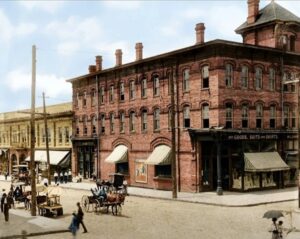
 You also may notice the graphics and style of the pages are all similar. And they all are algorithmically tested to get the most interaction. The use of computer-generated images that do not match reality is a feature, not a glitch, triggering predictable responses. The “versus” formula elicits tribalism, the “secret” histories which are not only not secret, but are part of almost every available public history, with many mistaking obscurity with secrecy, again eliciting outraged responses. But no matter what the method is, the point is to get you to interact with the page in some way. We remain aware of the proliferation of these A.I. pages, their lackluster and sometimes hallucinated histories, and their purposely incorrect imaging. If it’s attention they want, that’s what we would like to deny them.
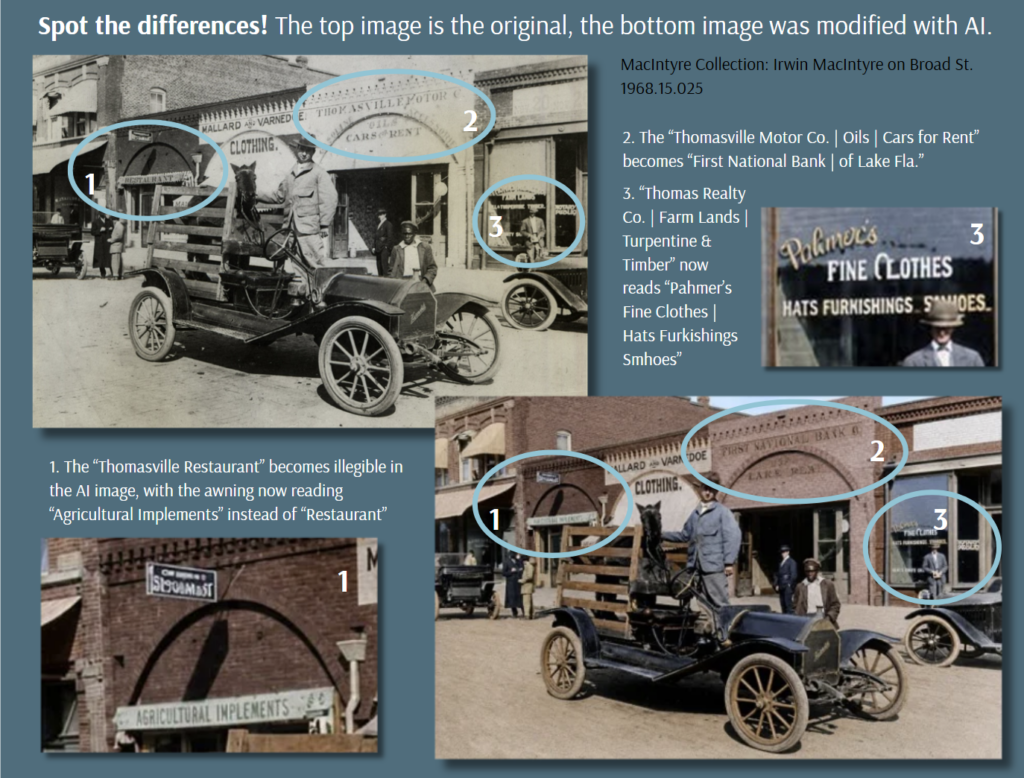
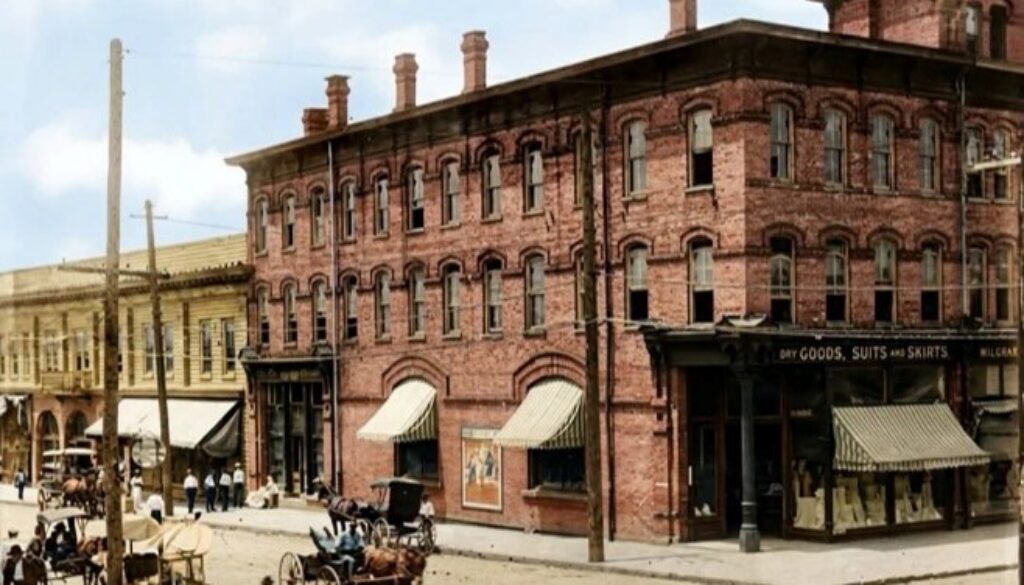
Related, but slightly different are the aggregator history pages – those that do not collect or preserve themselves, but rather comb the internet looking for existing material, and then re-packaging it as original. Increasingly, AI is used to generate accompanying narratives and enhance or colorize historic photographs. While these efforts can introduce local history to wider audiences, they can also create confusion about the authenticity of the images and the accuracy of the information presented. For example, AI-generated colorizations are sometimes described as photographic restorations, although the two processes are quite different. True restoration seeks to preserve or recover the original appearance of an image, while AI colorization introduces digitally generated details and interpretations that may not reflect historical reality.
Another concern is the accuracy of the historical information accompanying these images. AI-generated colorizations can introduce details that were never present in the original photographs, while AI-generated narratives sometimes combine unrelated facts or introduce entirely fictional information. Without proper review or clear labeling, these inaccuracies can easily be mistaken for historical fact. We’ve encountered examples involving local businesses, buildings, and institutions in which names, dates, and architectural details do not align with the historical record. These examples highlight the importance of consulting reliable sources and distinguishing historical documentation from AI-generated interpretations.
With all that said, we utilize AI as needed and when appropriate. Like any tool, it requires supervision and transparency. We use it for graphics, animation, and other applications, but never as a substitute for historical research. So, while we do not begrudge anyone enjoying a new perspective on old pictures, it’s good to remember what you’re looking at may be a simulation of history instead.