In a world where dating takes place virtually more often than it does in person, you might wonder what the people of yester-year had to go through to mingle as singles. You’ve probably heard stories about watchful chaperones and strict curfews: one wrong move could sour your reputation and ruin your chances of finding a partner. Knowing these difficulties but still wanting to meet people, a group of Thomas County boys met in 1914 and made a plan. They found older chaperones, procured a camping site along the Ochlocknee River, and sent out invitations to other young men and women throughout the Southeast to come to their riverside camping club for a week in the summer. From this plan, the Ochlocknee Riverside Camp was born.
Ochlocknee River Camp – Mitch Davenport and friends eating ice cream, 1916. THC 1967.01.349.
We have a book in our collection that documents this camp during its three-year operation. Each day the camp was open, the guests signed in, leaving us long lists of attendees. Over the past year, we have been working to research these attendees to see where they came from, who they knew, what happened to them after the camp, and – most importantly – how successful they were in their search for love!
With 78 campers attending over three years, only ten of those campers married one another. That’s a very rough 12.5% success rate for this camp as far as setting couples up goes. You drop a few points when you consider that the first chaperone was divorced shortly after the first camp year took place. But maybe marriage wasn’t the only goal. Afterall, many of the attendees were young teenagers – this camp was not only a good way to meet people but also a safe environment to practice socializing with people outside of their inner family.
Illustration from the Ochlocknee Riverside Camp Club Book, 1916.
At least, it was mostly safe. As happens with most groups of young people, there were times where campers didn’t get along – even if their camp rhyme stated that “Q is for quarrels, of which we have none.” Evidence of these heightened emotions pop up in a set of poems written in the 1916 section of the book. Judging from the way the poems are compiled, the book must have been passed around a lot, giving the campers the opportunity to profess their feelings about one another, show off their sense of humor, or make snide remarks back and forth (sometimes anonymously and other times more openly). You can read these poems through the above spreadsheet linked to the appropriate camper’s name.
At the end of the day, any event’s success is better measured not by a product (like marriages) or the length of time in which it ran, but by the feelings of the attendees. In this case, the Ochlocknee Riverside Camp could be considered a success. Many of the camper poetry calls out the success of the camp, complimenting the chaperones, the food, and the fun they had along the beaches of the Ochlocknee.
Men of the Ochlocknee River Camp, 1916. THC 1967.01.337.
In fact, it’s possible this camp would have continued for many years following had it not been for the United States’ involvement in World War I. We know at least seventeen of the thirty-eight men who attended the camp served in World War I in some capacity, two of whom died as a result of the war. And while they weren’t in the military, we know at least a few of the women served in auxiliary groups and with the Red Cross. If anything, the Ochlocknee Riverside Camp was the last hurrah for many of these young people before a harsh reality forced many of them to grow up quickly.
This little time capsule of a book captures a certain youthful innocence of the 1910s in Thomas County. A time when all that mattered to the campers was how good of a swimmer you were and whether or not the right person liked you back. So while they may not have had the longest running camp nor been able to point out several happy couples resulting from those summers along the Ochlocknee, the camp was able to bring together a score of young people from across the Southeast for some G-rated fun. It probably beat staying at home!
If you’ve been following along with our adventures over the years, you’ve probably heard about our Apprentice Program. Open to teens throughout Southwest Georgia and North Florida, we’ve invited them into the museum world for a few years now. They learn about the ins and outs of non-profits, from fundraising to education and curation and all the bits in between. Somewhere along the way, they even get to pick up soft skills like how to present yourself, working with others, and transforming their ideas from a spark of inspiration to something to be shared with the public.
Over the last year, we had six Apprentices across three cohorts. Our newest members, Bria and Wren, had a lot to digest as we took them through Museums 101. With the second cohort joining us, we took a trip to the Georgia Museum of Agriculture in Tifton to see how other museums operate. The Apprentices got to speak with the museum’s programs director – in action as she assisted a cane syrup bottling demonstration – explored various historic buildings, and participated in several activities from grinding corn meal to making rag dolls.
Speaking of the second cohort, we were glad to have Bella, Alanis, and Wesley join us for a second year in their apprenticeship. We took them deeper into the innerworkings of non-profits where they learned about budgets, living collections (that’s animals and plants), and the real-world applications of public history.
Jack shows off World War I artifacts from the Thomasville History Center’s collections.
Our longest serving Apprentice, Jack, has been with us for three years. As the sole member of his cohort (the others having graduated or moved on), we stepped up the game on his apprenticeship. Over several months, Jack visited the local courthouse record rooms where he studied a set of books listing every man (and woman!) from Thomas County who served in World War I. These books are over one hundred years old, with frayed pages full of detailed information on these officers, soldiers, seamen, and nurses, many of whom saw action in Europe. Their stories are told within these pages. With the data Jack collected, we will now be able to tell a more complete story about Thomas County’s involvement with the “War to end all Wars.”
At the end of each year, the Apprentices complete a capstone project, a culmination and application of what they’ve learned over the year combined with a subject that interests them. We challenge them to dream big and then transfer those ideas into a presentation that can be delivered to the public (usually an adoring audience of family and friends).
The Capstone Showcase was held April 26 in the History Center’s Davis Wing.
This year, they mustered up their courage and displayed several beautiful and well-thought out projects. Bria envisioned an off-site exhibition detailing her family’s history within Thomas County while Wren created a walking tour of a historic district near downtown Thomasville. Our second cohort featured fundraisers with Wesley’s idea for an event on the grounds of Pebble Hill, Alanis’s plans for a drive-in movie event, and Bella’s dreams for Folk Music festival that would educate attendees on the connections between folk music and native flora in the South. We rounded the capstones off with a presentation from Jack featuring the information he collected over the year accompanied by several artifacts from the History Center’s collections that will be used in future exhibit material here at the museum. Dozens of family members and friends turned out to view our Apprentices’ work and a good time was had by all.
We’ve been grateful to have the opportunity to work with the Apprentices over the years. Each one brings something new and unique to the table and inspires the staff at the History Center to dive deeper into the world of history and museums.
What must it have been like to live in Thomasville at the brink of the Civil War? Here at the History Center we have the transcript of a diary written by a young, seventeen-year-old woman over the year of 1861. This diary not only gives us insight into this question but also paints a vivid picture of life in South Georgia and how it was about to drastically change. Follow along as we explore the world from Henrietta Armstrong’s point of view in this blog series!
Last time we heard from Henrietta, she had just left Thomasville to spend some time with family in Eatonton, Georgia. As she arrived, the action that would kick off the Civil War was just starting. Troops were marching through her area, and Henrietta predicted that a war between the Union and the Confederacy would lead to disastrous consequences for all involved. But what will happen next? Will Henrietta ever see her husband again?
The month of April kicked off to the beat of drums as Confederate troops arrived in Macon at the newly dubbed “Camp Oglethorpe.” In the commotion of the arriving troops and gossip about Governor Brown’s doings around the state, Henrietta yearned to hear from her husband, Aeneas, or even her mother-in-law who had traveled to Fernandina Beach in Florida, yet no letters came. Her only excitement came from a walk to the fairgrounds with her father-in-law:
“We walked to the Fair ground this afternoon and saw Governor Brown review the troops. There are about 1,000 and 50 in the regiment. There was a great crowd assembled and I did not hear very well the Governor’s speech, though I understand that it was very good. I came home perfectly exhausted from the long walk.” (Thursday, April 4, 1861).
She continued to write of receiving no news for several days until the war pace suddenly picked up. Mrs. Armstrong returned from Florida and Henrietta received word from Aeneas just as news came about that the Confederacy had attacked Fort Sumter in Charleston, South Carolina. Her brother sent her a letter from Savannah detailing what he had witnessed:
“Buddie had just arrived in Savannah from Charleston. He was present at the commencement of the Storming of Fort Sumter and looked on he said for two hours. Aeneas was in Savannah when Richard wrote. Richard expected to leave the next morning to cruise about Charleston… We have fallen upon stormy times. God be with us and grant us Victory.” (Sunday, April 14, 1861)
With the action in full swing, Henrietta got to work sewing pants for the relatives who were receiving orders to join the fighting. With each day, she received more news of states leaving the Union and the Union’s attempts to stop them. But still she had no word from Aeneas.
By the end of April, Henrietta was growing further worried about her husband. All she had were reports from family passing through Savannah stating that Aeneas was sick but would soon be home. She waited until he finally arrived:
“Received a telegraphic dispatch from Aeneas last night saying that he was sick and would be here this morning. Mrs. Armstrong and I went to the depot to meet him and found him scarcely able to move. He is so changed with sickness that it makes my heart ache to look at him. We moved back into our old room this afternoon. Think he is a little better tonight.” (Monday, April 29, 1861)
Like many people in the South during this time, Aeneas suffered from Malaria. Malaria is caused by a parasite transmitted by mosquitos making it especially prevalent in tropical and sub-tropical locations like South Georgia. Though we have nearly eradicated the disease here in the United States, it used to kill thousands on a yearly basis. In Aeneas’s case, working in the Navy exposed him to infected mosquitos repeatedly over his lifetime, causing him to be frequently reinfected and leaving him sickly. The cure for the disease at that time was taking quinine, a medicine made from the bark of trees in South America, something Henrietta kept in-stock at their home near Albany. She likely prescribed it for them as she wrote about his improvement the next day:
“Aeneas is a little better this morning. He has had no fever all day. I have not been well myself, but it will not do for me to complain. I have been reading the “Dodds Abroad” by Lever, it is very amusing. The news today is still bad, I have not the heart to think about it. Mrs. Freeman and Mrs. Scott came here this morning. Mrs. Freeman thinks that everything will end well. I would like to feel so, but cannot. I hope Aeneas will be well soon. I joined the Ladies Relief Society.” (Tuesday, April 30, 1861).
In case she didn’t have enough going on, Henrietta had a new cause to take on. The Ladies Relief Society focused on obtaining supplies for Confederate troops from items like socks and pants to food provisions and even flags. Mrs. Armstrong joined alongside Henrietta and went to work making a flag for one of her son’s units. Henrietta took on the no less monumental task of making two uniforms. At the next meeting of the Ladie’s, she gave $5.00 to relief efforts, an amount that would equal a little over $145 today. But as all this happened in Macon, there were similar stirrings in Thomasville:
“I received a letter from Buddie today and wrote one to Ma. Buddie writes me that there are two volunteer Companies in Thomasville ready for service.” (Monday, May 6, 1861)
These companies would become the Thomasville Guards and the Ochlocknee Light Infantry. These groups were reorganized under the Confederate States Army as Companies F and E, respectively, of the 29th Georgia Regiment that summer. Of the 246 men who joined those regiments, 105 died during the War.
As Aeneas continued to convalesce, Henrietta and her mother-in-law continued their relief efforts in between concerts, trips to see the troops, and ice cream socials. Much like Americans today, the Armstrong family were big fans of ice cream. The Armstrong ladies’ contributions to the troops that month included multiple pairs of pants, shirts, flannel underwear, and a sack coat. It should be mentioned that not only did Henrietta and Mrs. Armstrong work on these clothes, they were also assisted by the enslaved women of household, including Flora who often took up the finishing work when Henrietta was sick or tending to Aeneas.
By the end of the month, word arrived from Thomasville that Buddie had joined a company in Duncanville. Duncanville was a small town west of Thomasville near the area we know today as Beachton along the border of Thomas and Grady County. Henrietta had little to say on the matter, perhaps too worried about Buddie and her ailing husband to commit her thoughts to paper.
The late spring of 1861 was shaping up to be a busy time for Henrietta with little hope for rest in sight. As the month of May came to a close, she and her husband packed their bags and began their journey home to their plantation near Albany. What would they find when they got there? Will Aeneas ever recover? And how will the family cope with Buddie’s decision to join the army? Find out next time!
Every so often, the museum receives a donation that includes a cookbook or recipe card. Sometimes the recipes are familiar comfort foods still served on many Thomas County tables. Others… well, let’s just say some recipes are best left in the past. This series highlights some of those recipes: from the classics to the experimental. If you try any of these recipes, successfully or not, let us know what you think in the comments!
I have to warn you — there might not be a big history lesson in this blog. The History Center has been aflutter with students from all over our county coming in to get some last-minute learning done before the school year wraps up. But when you’re running around with very excited students all day, you need to keep your energy up and fuel your body with plenty of electrolytes. That’s why today’s blog features a recipe from our collections for a blue-ribbon winner that is sure to help you muster through while also tasting delicious: Squash Pickles.
Clara Hargrave’s Yearbook Photo from Valdosta State University. Image courtesy of ancestry.com.
This recipe comes to us from Clara Hargrave (1910-1998). Clara was one of six kids born to the Hargrave family in Thomasville. Her father, Walter Davis Hargrave (1876-1966), was the business manager of the Thomasville Times-Enterprise for over 50 years, a trustee for Abraham Baldwin College in Tifton, and a founding member of the Thomasville Chapter of Kiwanis. Like her father, Clara furthered her education after high school by attending Valdosta State University. She went on to work as a secretary for the Veterans Administration and later worked with the Chamber of Commerce. As the Hargrave children grew up, they donated many family items that cement their place in Thomas County’s history – including this recipe!
Squash Pickles
4 cups thinly sliced young squash
2 cups thinly sliced onion
3 cups sugar
2 cups vinegar
2 teaspoons whole celery seeds
2 teaspoons whole mustard seeds
1 tablespoons salt
4 bell peppers (can use Green and red Bell Peppers)
Place squash and onion and salt in container and let stand one hour. Cut up Bell Peppers and place with other ingredients and boil. After one hour has elapsed drain squash and onion of liquid that has accumulated. Place squash and onion in boiling liquid and boil approximately 2 minutes. Do not boil too log as we do not want squash soggy. Then place pickles in scalded hot jars and seal.
(Above is Blue Ribbon recipe, which calls for 4 cups squash. Brooks County Recipe calls for 8 cups of squash. I used 5 cups of squash. Emily Milton used 8 cups of squash and said it makes up just fine that way.)
At the time of this blog’s posting, school children across our community are busy with end of year testing: from Milestones Finals to AP exams and all the standardized bubble sheets in between. But what was school like before government-mandated testing and number two pencils? And how did Thomas County handle educating the youth of the past? Let’s take a step back in time and learn a little about the history of education in our own backyard!
While Thomas County wasn’t founded until 1825 (two hundred years ago this December!), the State of Georgia was addressing the topic of education as early as 1777. In Georgia’s first constitution, the delegates made a provision stating, “ Schools shall be erected in each county, and supported at the general expense of the State as the legislature shall hear after point out and direct.” In case you’re wondering how serious these people were about education, our state government went on to put out three more constitutional updates before 1861, with all but the second one containing some sort of educational provision.
There were two ways to enforce this part of the constitution within a county: 1) start a “Poor School” funded mostly by the State and local government or 2) start an “Academy” which charged students tuition to cover expenses (minus a time between 1820 and 1840 where the State did provide some financial assistance to these schools and students). With these steps in place the State had a new issue: defining a “poor” student.
Henry Mitchell’s School Book, Thomasville History Center Collection.
According to the State of Georgia in the early nineteenth century, “poor” students were either male or female and ranged in age from 8 to 18. They were mostly White although there were Free People of Color living throughout the state, including in Thomas County, who may have had the opportunity to attend school. (As an aside, The Georgia Slave Code prohibited teaching enslaved people to read; however, we know from anecdotal evidence and later documentation that this ruling did little to stop people from teaching the enslaved whether for religious and moral reasons or business reasons.) Poor students were entitled to three years of “poor schooling” which provided them with skills in reading, writing, and arithmetic (the infamous “Three R’s”). This system could be considered a precursor to modern public schooling. But for the people of early Georgia, it was considered unfashionable and even embarrassing to participate in the system. By 1840 only 12 students in all of Thomas County took advantage of State funds to achieve their education.
For the rest of Thomas County’s youth who had the resources to attend school, their educational career could be far longer and in depth. These students could find classes starting as early as five years old for both girls and boys, with subjects differing by gender. Tutors could be brought into the home, or children could be sent to various “Academies” as were available to them.
1860 Plat Map of Thomasville showing the Academy Lots. Thomasville History Center Collections.
Thomasville’s first academy was chartered in 1830 with a classroom built on the corner of Madison and Monroe Streets (currently the site of a parking lot). Classes began in 1832 with 42 students, male and female, in attendance. The curriculum originally only covered the Three R’s mentioned earlier before expanding as enrollment grew. By 1836, a new classroom was built on the corner of Broad and Monroe Streets (currently the site of the Hayes House) and by 1838 new secondary courses were added such as music and languages. The Academy continued for the next decade before losing steam in light of other schools developing around the County.
Despite the lack of public education, in 1840 Thomas County, only 330 out of 6,766 white adult citizens (women included) were illiterate, a mere 4.9% of the community. By then, more schools were opening throughout the county. These were mostly temporary schools set up by groups of families and neighbors who paid a tutor to work with their children for a few months out of the year. By 1850, Thomas County’s literacy rates improved even more with only 148 out of 10,103 White citizens being illiterate or 1.5% of the population. At that point there were 14 common or public schools in the County, educating 216 students with 12 teachers.
Fletcher Institute Report Card for Mattie Jones, 1860. Thomasville History Center Collection.
The 1850s were an educational boom time in Thomas County. In 1850, the co-ed Fletcher Institute was founded where Harper Elementary School stands today. In 1855 the County had three schools. Grooverville Academy on the border of modern-day Brooks County had two teachers, Mrs. Smith and W.H. McMurray, and over 50 students. In Thomasville, Cornelia Hansell started the Female Seminary with three teachers including Cornelia, Addie Armstrong, and Professor Parsons teaching a number of young girls. Down the street (near the current Marriot Hotel in downtown) was John M. Dyson’s “Lecturing School” where he taught young boys the art of oration as well as ancient languages and mathematics. By 1857 a Mrs. Simmons opened Piscola Academy and by 1859 two more schools were added with Miss S.M. Kellog’s Academy teaching young children the Three R’s and secondary subjects and Mrs. Julia Fisher’s Tockwotten Academy. By the end of the decade, the movers and shakers of the town were planning for the next level of education they thought Thomas County desperately needed: a women’s college.
Like all boom times, this one quickly came to an end with the advent of the Civil War. Just as we experienced with the lock downs during Covid, students were sent home from schools across the State. For many families, education was put on the back burner as children were needed to help out at home while the men of the family were involved in war efforts. Likewise, teachers were also assisting with the War. Julia Fisher of Tockwotten Academy closed her doors in order to lead the Ladies Aid Society gathering and making supplies to send to local military units. Formal schooling became close to non-existent throughout Thomas County.
After the end of the Civil War in 1865, the 14th Amendment and Reconstruction efforts across the South ushered in a new wave of students and an increased appreciation for education. With formerly enslaved people now able to obtain and education, schools were built specifically for their benefit with a Freedman’s school and later several private schools popping up in Thomas County. Meanwhile, many of the larger schools in place before the War continued, such as the Fletcher Institute which later evolved into South Georgia College. Young’s Female College, interrupted by the War, finally opened its doors in 1871. Throughout the rest of the nineteenth century, small schools popped up around Thomas County to serve both White and Black communities reach varying levels of education.
While it will take some more research to measure how the Civil War affected literacy rates in Thomas County, it’s clear to see that many students lost out on the opportunity to learn in a formal setting during the War years. Just as we experienced during Covid, many students had to learn at home. Students were dependent on family members who may or may not have had the resources or education themselves to help younger learners. Fortunately, the lost opportunities gave way to an increased interest in education for the next generation of students. Before long, Thomas County would begin the long process to the standardized public education system we are familiar with today.
Every so often, the museum receives a donation that includes a cookbook or recipe card. Sometimes the recipes are familiar comfort foods still served on many Thomas County tables. Others… well, let’s just say some recipes are best left in the past. This series highlights some of those recipes: from the classics to the experimental. If you try any of these recipes, successfully or not, let us know what you think in the comments!
Interior view of the Terrace Tea House, 1940. Thomasville History Center, 2015.012.0001.
Today’s recipe is a sweet treat to beat the spring heat! It comes to us from the Terrace Tea House, a restaurant and boarding house in Thomasville during the early half of the twentieth century. In 1937, just a few years after the death of her husband, Lillie May Winstead Montgomery (1887-1965) opened the Terrace Tea House inside her home at 628 Gordon Avenue. With the help of her daughter, Mary Louise (1912-1976) and son, John (1920-2003), the family kept the business going throughout the start of World War II before Lillie May took on the role of running the Three Toms Inn, a much larger hotel located further down Gordon Avenue.
Lillie May was born and raised on her family’s homestead in Paducah, Kentucky. In 1908, she married John Swift Montgomery (1882-1930) of Thomasville. Just like her father, John was what we would now call a pharmacist. The couple moved to Thomasville and lived down the street from John’s parents on Madison Street (currently part of the TNB parking lot). Lillie May ran the family home and earned extra income by taking in lodgers. Two children, one World War, and a Great Depression later, John died suddenly, leaving Lillie May to care for their two children on her own.
Advertisement from the Thomasville Times-Enterprise.
In 1937 she started the Terrace Tea House, serving lunch and dinner throughout the week during the winter season and housing lodgers, many of whom were newly-weds waiting to find their first home. Several clubs held meetings there, such as the Rotary Club after their usual spot, Glen Arven Country Club, was damaged in a storm. By 1942, Lillie May was approached with a new opportunity of running the Three Toms Inn. She closed down the Tea House and moved to the Inn, but we are fortunately left with her hand-made recipe books to remember her business by.
Ice Box Rolls
Ingredients:
1 egg
½ cup sugar
1 tablespoon lard
1 yeast cake
1 cup cold water
1 cup milk
1 teaspoon salt
Enough flour to make soft dough.
Method: Let [mix of all ingredients] stand in ice box over night. Roll out [dough] two hours before baking and let rise. Bake about 20 minutes. Put melted butter on top.
What must it have been like to live in Thomasville at the brink of the Civil War? Here at the History Center we have the transcript of a diary written by a young, seventeen-year-old woman over the year of 1861. This diary not only gives us insight into this question but also paints a vivid picture of life in South Georgia and how it was about to drastically change. Follow along as we explore the world from Henrietta Armstrong’s point of view in this blog series!
Last time we heard from Henrietta, she had just learned of the State of Georgia’s secession from the United States of America. She was excited about this news in January of 1861. Will her feelings change along the way? In the meantime, how does she spend her days as a lady of leisure? Let’s find out.
When we last left off, Henrietta was home in Albany, but she and her husband, Aeneas, were planning to travel to her brother’s home near Lake Iamonia. Pleasant Nixon Vickers (1838-1873), otherwise known as “Buddie,” owned a plantation along the South Georgia border with Florida. Buddie’s wife, Annie, had recently given birth to their first child, a little girl who would later be named after Henrietta.
“This is the First day of February and it has been windy and rainy. Aeneas and Buddy went off this morning on a collecting tour and will be gone I expect four or five days. We have been working in the parlor all day. Annie wanted to have her room scoured and cleaned up generally. Ma and I helped to finish Annie’s delaine dress and I have been sewing on a dress for the babie [sic]. I have had a bad Headache all day. After supper I hurt my finger badly, not withstanding, I played Whist with Annie against Ma and Mr. Gunn. The wind blows hard.” (Friday Feb. 1, 1861)
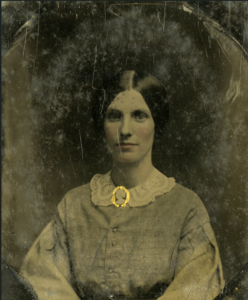
Fig. 1: Unidentified Woman, c. 1860. Thomasville History Center, 2024.045.0005.
The men of the family are said to be on a “collecting tour” but the “what” being collected is never specified. It may have been money from borrowers or renters who lived in the area or even taxes. Meanwhile, the women stayed behind to help Annie by making clothing (the delaine dress mentioned is a type of wool and cotton fabric blend used for day dresses like the one pictured in Figure 1) and entertaining (Whist was a popular card game). Interestingly, Henrietta mentions Annie having her room scoured. Most likely the enslaved maids on the plantation would do a deep clean of the room, taking out all the linens to be washed and scrubbing down the floors and furniture. As anyone who has brought home a newborn can tell you, Annie’s room was probably pretty messy.
If this sounds like a pretty dull start to this journal, you aren’t wrong for thinking so. Like many women of her time, social status, and location, Henrietta spent a lot of time doing chores in the daytime and finding ways to pass the night until morning came around again. Her biggest excitement came two weeks later.
“It was raining this morning but cleared up about twelve. Aeneas wrote to Mr. Folsom ordering a sewing machine and Buddie sent him the letter by Elias. We received an answer in the afternoon from Mrs. Folsom saying that he would be here with one to morrow [sic] or next day. Buddie and Aeneas went fishing this evening and caught over thirty of the finest speckled perch that I ever saw.” (Thursday Feb. 14, 1861)
A sewing machine may not sound like a romantic Valentine’s gift for some, but for (accident prone) Henrietta, it meant her sewing projects moved at lighting speed (unbeknownst to her, this would come in handy over the next few months as her friends and neighbors joined the Confederate Army and needed uniforms). As for her Valentines Day meal of perch that she was so excited about, that would all change by February 20th when she wrote, “I am perfectly sick and tired of fish.” And just as fish and house guests tend to smell after a few days, the whole family made an exciting trip to Thomasville!
Fig. 2: Frances Amanda Tooke Seward, c.1850. Thomasville History Center, 1978.010.1492.
When the Vickers and Armstrongs visited Thomasville, they stayed with relatives. Henrietta was connected to the Seward family of Thomasville through her father’s first marriage to the mother of Frances Amanda Tooke Seward (Figure 2). Frances was married to James Lindsey Seward, who had served in both the Georgia and United States Houses of Representatives. Henrietta doesn’t go into detail about her stay with the family at this time, but she does talk about visiting friends and the fun she could have in town.
“We left Buddie’s this morning. The day is very pleasant though cloudy. Buddie came to town with us and will not go home until tomorrow. We all stopped at Mrs. [Frances] Seward’s. After dinner we went to town and I bought several articles then went round to see Lena Seixas, but did not find her at home. I called in at Mrs. H. Seward’s [Mary Harvey Seward, sister-in-law of Frances and James] and saw several of my old friends. I received a note from Lena tonight. We have put off leaving until tomorrow night.” (Tuesday Feb. 26, 1861)
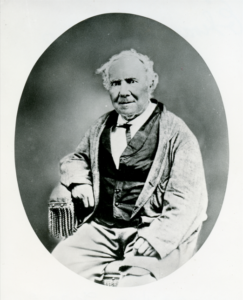
Lena Seixas was the daughter of Edward Seixas (Figure 3), a Thomasville pharmacist and Huldah Smith, a member of the Smith family that gave Thomasville the land for Paradise Park. The Seixas family were some of the earliest settlers of the town. However, just a few months prior in September of 1860, Lena’s brother was mortally wounded in a duel. This meeting may have been the first time Henrietta would have seen Lena following the incident. So how was the family doing? Henrietta met them the next day:
Fig. 3: Edward Seixas, 1860. Thomasville History Center, 1978.010.1450.
“Another pretty, but rather cloudy day. I went over to see Lena this morning. They were all glad to see me. I promised Lena to go to the Daguerreian Room this afternoon… Lena and I had our tintypes taken this afternoon, she gave hers to me. We left Thomasville on the stage [coach] at eleven o’clock to-night… There are a very few passengers in the stage.” (Wednesday Feb. 27, 1861)
Henrietta refers to a “Daguerreian Room” or what we would call a photography studio. At the time of this diary entry there were two studios in town: Remington’s Photographic Gallery was likely in the area that is now the Plaza and Professor Jeffers’s studio, later named the Sky Light Gallery and located on the second floor of a building downtown. Henrietta doesn’t specify which gallery they went to, but she does mention the only way to travel out of Thomasville at the time: stage coach, the 1800s precursor to a Grey Hound bus.
If February was a dull month, March quickly picked up the pace. March 4, 1861 marked Abraham Lincoln’s inauguration as President of the United States. Meanwhile, Henrietta and Aeneas made a detour to see his family in Macon before heading home to the Albany area. Just as soon as they got home, Aeneas was ordered to join a the CSS Savannah, a former steamboat called Everglade before it was converted into a gun boat for coastal defense.
“… I received a letter from Aeneas this afternoon. He is in Savannah and has been ordered to join the War Steamer, “Savannah,” formerly the “Everglade” a passenger steam boat. I do not know when I will see him, not very soon…” (Wednesday Mar. 6, 1861)
Seventeen-year-old Henrietta was left with a choice: stay home and tend to the plantation in her husband’s absence or go stay with her aunt in Eatonton, Georgia. Henrietta chose her aunt. She followed up with more news the next day: “Fort Sumter, it is expected, will be evacuated very soon, but the Yankees are so tricky that we cannot tell anything about it.” As quiet as Eatonton was, the rest of the country was heating up, and within a month, the first shots at Fort Sumter would signal the official start of the Civil War.
After three weeks in Eatonton, Henrietta went to her mother-in-law’s home in Macon to keep house while the rest of the family traveled to Florida for business and health reasons.
“Mrs. Armstrong is better this morning and has determined to go to Fernandina with Mr. Villepigue [Frederick L. Villepigue, Aeneas’s sister’s husband and Secretary of State for Florida from 1853-1863]. I will remain here and keep house until she returns. I did not hear from Aeneas today. I have remained in the house all day. I shall be very lonesome by myself, but I am fast learning to expect nothing and to bear misfortune as quietly and phlegmatically as possible. Mr. Villepigue makes himself very pleasant. I have nothing of importance to write in my Journal tonight, so I will put it up and let it alone. For to-night.” (Tuesday Mar. 26, 1861)
A few days later, Henrietta would have more of importance to record:
“…From accounts in the papers we may hope for a peaceful settlement to the difficulties between the North and South. But Lincoln and his cabinet are so tricky we cannot rely on anything they say. I will not be surprised if we have War and if we do there will be more blood shed than has ever been known. God grant that it may be otherwise.” (Thursday Mar. 28, 1861)
As the month continued, thousands of Federal troops arrived in Macon on their way to Pensacola, Florida to be shipped home. Henrietta had no idea how prophetic her words would prove to be over the upcoming months and years as the Civil War swept through our area and the nation. Tune in next time to see how Henrietta adapts to her newly changing world on the brink of the American Civil War!
Over the next ten years, our country will be headed into a monumental celebration as we mark 250 years since the signing of the Declaration of Independence and our start as a new nation. One of the major players of the American Revolution was an unlikely supporter: the Marquis de Lafayette was born into the French nobility and was only in his twenties when the War began. Despite his unlikely beginnings, he rose up to become one of the greatest leaders of the Revolution and remained popular among Americans for the rest of his life. His popularity allowed him to travel the country during many celebratory tours, with his Farewell Tour taking place in 1825. As people across the country commemorate the 200th anniversary of this trip, let’s check out Thomas County’s own connection to the military leader and “Guest of the Nation.”
The History Center has a skirt in its collection that dates to the late 18th century. It is composed of an outer layer of blue silk and an inner layer of plain linen that have been quilted together. There is no shape to the skirt. Instead, it is made up of six rectangular panels sewn together with a set of drawstrings on each “side” end of the item which can be pulled in to give the skirt a shape. The only clues we had for this skirt came from two little labels inside: one piece of cloth tape that had “BIBB” written in ink across it and a little piece of paper pinned to the lining that read, “This skirt was worn to a ball given in honor of General Lafayette, with this skirt was born a court train of brocade satin with pink roses.” So where did this skirt come from? And was it really worn to a party for the Marquis? We had to find out!
The skirt laid out for examination.
Our records revealed the skirt was given to the History Center by a lady named Gladys Bibbs in 1989. Her story was that the skirt had been passed down through her family for generations, a family by the last name of Adams. Naturally we checked out her line on our ancestry.com account: it turns out she was related to a family named Adams who lived in Maryland along the Potomac River. So here we have a colonial-era family living in a prominent area and owning this skirt – but does that mean it went to a party for the Marquis?
Map showing the distance from Washington’s Mount Vernon to the Adams’s home in Port Tobacco, Maryland.
We looked into Gladys’s ancestors: Nancy Ann Hanson (b. 1761) who married Daniel Jenifer Adams (1749-1796). While Nancy was our skirt wearer, we were curious about her husband too. Daniel was named after his maternal uncle, Daniel of St. Thomas Jenifer, a prominent plantation owner, politician, and signer of the Constitution of the United States. On top of all that, this uncle was best friends with his neighbor who lived across the Potomac – George Washington.
Thanks to his uncle, Daniel Jenifer Adams had access to the big man himself. Washington kept meticulous notes of his days in his journals, listing who came to supper and who stopped by on business. He also kept many of his letters and records related to his business. It’s in these records we see that Washington and Daniel were very much involved in each other’s lives, but Washington may not have been too happy about that!
Engraved portrait of Major Daniel Jenifer Adams.
In one letter, Washington called Daniel “the most worthless young man.” There were several times that Daniel let the General down. The first time came when Washington let Daniel sell some of his produce. They agreed Daniel would sail down to Bermuda, sell the grain, and use the money to buy items on Washington’s grocery list. Daniel sold most of the grain in Bermuda. But then he took a little detour to Jamaica and bought the ship he had been sailing on, including all the goods on board. With the way the deal with the ship owner was set up, this sale of goods meant Washington would not get his money back for his grain still on the ship. As you might imagine, Washington was a little upset about this! He sued Daniel, forcing the young man to sail back to Virginia where Washington put the boat up for auction trying to make back his lost money. Unfortunately, no one wanted to buy the boat, and Washington ended up having to buy the boat from himself for $300.
Another issue came up during the American Revolution. Daniel joined the Maryland Militia Line, a group of volunteer soldiers in charge of protecting the colony against the British and serving under the direction of General Washington. Daniel did surprisingly well in the military; in fact, he was the fourth best Major in the Maryland Militia. Until his pride got in the way.
By the end of 1779, Daniel had been passed over for promotion, and worst of all, it went to someone he despised. Daniel wrote a letter to Washington explaining that while he knew this was crunch time for the Colonial Army, being an army major didn’t pay enough for him to support his new family (he had just married Nancy). This wasn’t a total lie: Daniel’s father had just died with several debts to be paid. Washington stepped up and offered to buy the Adams family home and pay off their debts – a fairly grand gesture! Daniel agreed to the arrangement but kept coming up with excuses as to why he and his sisters could not leave the home and why they were selling off pieces of the property that should have gone to Washington. Daniel was definitely down at this time, but with his wealthy and prominent uncle around, he was never out.
Years later, Washington became President of the newly formed United States. After the Revolution, Congress passed a bill stating soldiers who fought in the recent war would receive a pension for their service – but there was a catch. Only those who served from 1780 onward (a month after Daniel quit) were eligible. Daniel wrote a letter to his famous neighbor begging for help with Congress. He told Washington his prior military service had left him in poor health and his attempts at work had been less than successful. Washington never replied.
Don’t feel too bad for the Adams family. When Uncle Daniel of St. Thomas Jenifer died in 1790, he left his 16,000-acre plantation to Daniel – so life couldn’t have been too bad for him, right?
So now we’ve found the connection between the Adams family and George Washington, but how does that put our skirt in the same room as Lafayette? During the War, Washington and Lafayette formed a father-and-son bond that would last the rest of their lives. When the War ended in 1784, Lafayette was hailed as a hero in America and began touring his second homeland on a celebration tour.
The skirt on display at the History Center in 2021 with a paper facsimile next to it.
One of his first stops was in August of 1784 at Mount Vernon, Washington’s home along the Potomac. Washington and Lafayette partied for ten days before the Marquis continued his tour. On the invite list to this ten-day festival were many of Washington’s friends and neighbors. We can surmise that Daniel and Nancy Adams were guests at one of these parties where Nancy might have worn the skirt that now resides in our collection. The timing works out as Nancy would have had about a year to recover from the birth of her second child in 1783 and wouldn’t be pregnant again for another two years.
So if you’re feeling down, just think about this beautiful skirt and remember that no matter what, at least George Washington never called you “a worthless young fellow.”
Every so often, the museum receives a donation that includes a cookbook or recipe card. Sometimes the recipes are familiar comfort foods still served on many Thomas County tables. Others… well, let’s just say some recipes are best left in the past. This series highlights some of those recipes: from the classics to the experimental. If you try any of these recipes, successfully or not, let us know what you think!
Todays recipe comes from Anna Mitchell in the book Our Favorite Recipes, a cookbook compiled as a fundraiser for the Thomasville Firemen’s Fund in 1969. The Fund set aside money for emergencies the firemen might face such as hospital bills incurred in the line of duty.
The cookbook includes a brief history of fire fighting in Thomasville starting with the first department organized in 1866.
“The first Fire Protection Company of any type was organized in 1866 by the Mayor of Thomasville at that time, Col. Peter McGlashon. They were called the ‘Neptunes.’ For the next 30 years there were a number of men elected Chief of the organization although none of them were paid. Neither was there a Fire Station. After a particularly disastrous fire on Broad St. in 1873, there was quite a bit of dissension and misunderstanding in the organization. For the next few years four or five different men headed the Organization. Then in 1896 the ‘Neptunes’ asked the city to take over their equipment and disbanded the organization. In 1897 the first Engine House was constructed.”
That engine house was located on the corner of East Jackson Street and Crawford Street, just a few feet away from the current location. The two story, brick building was divided into three sections: one room for storage, one room for the fire engine, and one room for the supply wagon. A small wooden structure on the side held the extra hoses.
Speaking of the engine, the cookbook goes on to describe the department’s vehicles over the years.
“In February 1913, the Department got its first motor driven fire apparatus. A Type 10 American LaFrance Pumper. In 1916 – a Type 12 Pumper. In December 1916, the Department suffered its first casualty. Chief Dawkins was killed in a wreck enroute to a fire. The accident occurred under the ‘Big Oak’ of Thomasville. He collided with an auto driven by Mrs. Frank Woodward. Oscar Davis, Sr. who was later made Chief, was injured in the same wreck. Chief Porter was elected Chief to succeed Dawkins. This was in 1918. During the next 30 years there were many improvements. An alarm system was installed, two new pumpers purchased, additional men were hired, until at present we have five pumpers and one 65 foot aerial truck. In 1954 another Fire Station was completed on Bartow St. The Department now operates with the Chief I. D. Golden, an assistant Chief, and 28 men. These men work 24 hours on duty and then are off 24 hours.”
The second vehicle mentioned above, the Type 12 American LeFrance Pumper, was donated to the Thomasville History Center in 1972. In 2016, a century after it first arrived in Thomasville, the engine was restored to its original appearance and remains on display at the History Center in the Flowers Garage.
If you’re interested in learning more about Thomasville’s fire department history, drop by the museum to check out our exhibit on the department and see the LeFrance in all her shining glory. For now, let’s get back to the cookbook portion of our story – a little recipe for something called “Coca Cola Chicken”!
Coca Cola Chicken
1 fryer [chicken], cut up
1 c. catchup
¼ – ½ c. lemon juice
Garlic salt
1 c. Coca Cola
1 c. Worcestershire Sauce
¼ c. sherry (optional)
Put CocaCola, catchup, Worcestershire sauce, and lemon juice in a thick pot with a tight lid and bring to a boil. Put garlic salt on pieces of chicken. Put chicken in pot, bring to a boil again. Turn to simmer. Put lid on tightly and cook for 45-60 minutes. Check and add water if gravy becomes too thick. Add sherry just before taking out of pot. Serve on fluffy white rice. Approximately 4 servings.
Anna Mitchell
Our Favorite Recipes: Presented by the Thomasville Firemens Fund of Thomasville, Georgia 1969
February is the month of love, and we have quite a few love stories in our collection. One example comes from a small, cloth bound book that belonged to the Ochlocknee River Club, a sort of “marriage camp” for Thomas County’s jet set in the 1910s. The book served as a sign-in sheet for attendees as well as a message board for those sweet flirtations that naturally sprung up in a crowd of young adults in woolen bathing suits. Let’s explore some of these love notes (or doodles) from the book. Maybe some of them will inspire your next valentine card! Or in some cases, anti-Valentine card.
July 26, 1916
“Here’s to sweet Mariana
Sweeter than a luscious Banana
But I can’t recollect
If she think of me yet
She is the Best of all Dears
Is this little Girl Sears”
– Jim Gribben
Unidentified group lounging at the Riverside Camp, 1916.
“To Helen Vaughan –
The girl so fair who is
Buxom, blythe, & debonair.
Her eyes they shine but
Not for me – However
They are glimmery!
Her hair is blond
But I don’t know it
May be peroxide you
Know. However
She’s not my bride
But the queen of
Riverside.”
– Boots Coopse [Bill Cooper]
“Here’s to our new camper, Dor[b]is West,
For rain or sunshine he’s the best;
He goes sometimes with Annie Will Pierce,
And we believe he loves her something fierce.
To have him with us, we are glad,
For he’s the finest, could be had.”
– Nelle Patten
“Of all the Boys theres one who won’t DO
His name of course you know is ZU.
He seems to be always alert
Making love to every skirt
So Girls take care and do beware,
That boy wont do that you call Zu.”
– Minnie Weldon
Robert “ZuZu” Wimberly (1895-1947) in his WWI uniform.
“A ginger snap I wish I were,
Or even a Saltine would do;
Or any cracker of the ‘N.B.C.’ [National Biscuit Company, aka Nabisco]
For then I’d be sent to Zu –
Nabiscos, fig newtons, and five o’clock teas,
Hueedas[?], grahams, and lady fingers.
He sells all these in a way to please
But with the last mentioned he lingers!”
– Anonymous
“Here’s to our waiter, John
With a fine-looking moustache
With snow white apron and cap on,
He serves us beans and succotash.”
– P. [Nelle Patten]
“For Nelle Patten I have nothing to say
For she is sick every other day
Her only only Hearts delight
Its to lay in the hammock and sleep half the day.
When one of her lovers comes to say
A word or two as in the day
She only opens her eyes to say
Don’t shake the swing please go away.
And that is all she has to say.”
– David Brandon
Unidentified woman lounging on camp grounds, 1916.
“For a while I felt like H—l
Until I met that Sweet Lutrelle
She has made my heart a whirl
Just that Dear little girl.
– O. [Grover] Balfour
“A young man by the name of Paul Searcy
He loves all the Girls oh! Mercy
And for selecting a bevy of pretty lassies
For wholesale courting, ZuZu he surpasses.”
– Minnie Weldon
“Our camp has been a great success
Of all the others this is the best
Of chaperones there’s no dispute
‘cause the best in the world is Mrs. Dismuke.”
– S. V. [Sydney Victor] Steyerman
“Riverside Camp: Ring Twice If You’re Lonesome” Sketch by anonymous camper, c. 1916.