
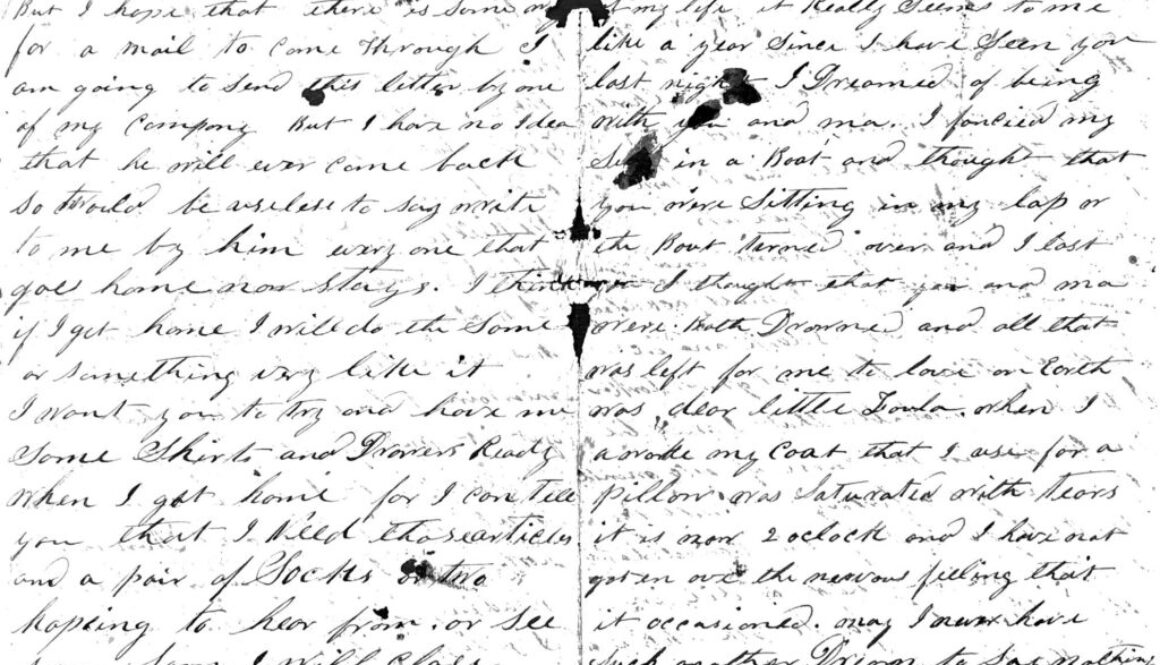
“Another Bad Day”: The Diary of Henrietta Eugenia Vickers Armstrong (Part 4)
What must it have been like to live in Thomasville at the brink of the Civil War? Here at the History Center we have the transcript of a diary written by a young, seventeen-year-old woman over the year of 1861. This diary not only gives us insight into this question but also paints a vivid picture of life in South Georgia and how it was about to drastically change. Follow along as we explore the world from Henrietta Armstrong’s point of view in this blog series!
_______________________________________________________________________________
It’s been a while since we last checked in on Henrietta. When we last left off, she was suffering from the summer doldrums, but what will the next few months hold in store? A lot is happening around the world, and Henrietta may soon find herself appreciating those down times she once took for granted.
The first two weeks of August passed much like the previous weeks: everyone is still stuck at home, everyone is still sick, and the weather is awful in some form or another (this time it’s constant rain!). But thankfully for the family (and the reader), Aeneas proposed a trip to Thomasville! After riding in their own carriage from Smithville to Albany, the couple took “a miserable hack” or stagecoach on the final leg of the trip to Thomasville (Thursday, August 15, 1861). After arriving in town, they rented a carriage from Jim McLendon and rode to Buddie’s house just past the Florida border.
At this same time, things are heating up on the battlefields of the Civil War: Henrietta reports on a battle that has taken place in Leesburg, Virginia where the Federalists went into a retreat and lost three to four hundred men with fourteen hundred taken prisoner (Saturday, August 17, 1861). Keep in mind, Henrietta’s information is a little inflated. The fighting she refers to is the Battle of Ball’s Bluff where a little over two hundred Union troops were killed and over five hundred were captured – a still impressive figure considering the wild discrepancy in size between the Union and Confederate Armies at this time.
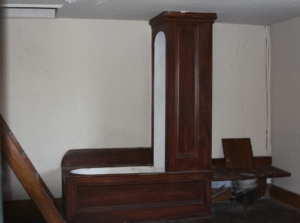
Over the next few days, Henrietta starts to have some fun again. Having been reunited with her sister-in-law, Annie, the two go out on the town (with Annie’s baby and an enslaved maid named Eliza in tow). Their activities include all the things gentlewomen could be expected to do: calling on friends, reading new books, strolling in the moonlight, and taking showers (Tuesday, August 20, 1861). Yes, the modern shower as we know it today is not quite so new in time as we tend to think. At this point in time, showers were not hooked up to plumbing, and instead used a reservoir of water that was recycled through the drain-to-shower head system. While they may seem primitive by our modern standards, they were high tech and novel for people in Henrietta’s time. As Henrietta did not have a shower at home (she likely used a tub as most people did) she wrote about her novel experiences taking showers several times (thrice in one week!) during her trip to Thomasville.
Backing up a bit, who were some of these friends that the ladies called on? Several families are mentioned like the Barkers and Aldermans. One individual included on their calls was Annie’s cousin, Ephraim Ponder. Henrietta gives us a few words on him, stating, “Mr. Ephraim Ponder is here and looks very badly,” (Wednesday, August 21, 1861). He had every reason to look badly. Ephraim Ponder may sound familiar as he is known today in Thomasville for being the enslaver of the Flipper family of Lieutenant Henry O. Flipper fame. While the Flipper family has gone down in the history books for Henry’s historic role as the first Black graduate of West Point, Ephraim’s reputation has not held up as well. Back in 1853, Ephraim married Ellen Gibson Gregory, a woman nearly twenty years his junior who was known for her beauty, spunk, and popularity. Unfortunately, she was a little too popular with other men for Ephraim’s taste and in a few months from Henrietta’s diary entry, he divorced her. Henry Flipper’s autobiography mentions her behavior:
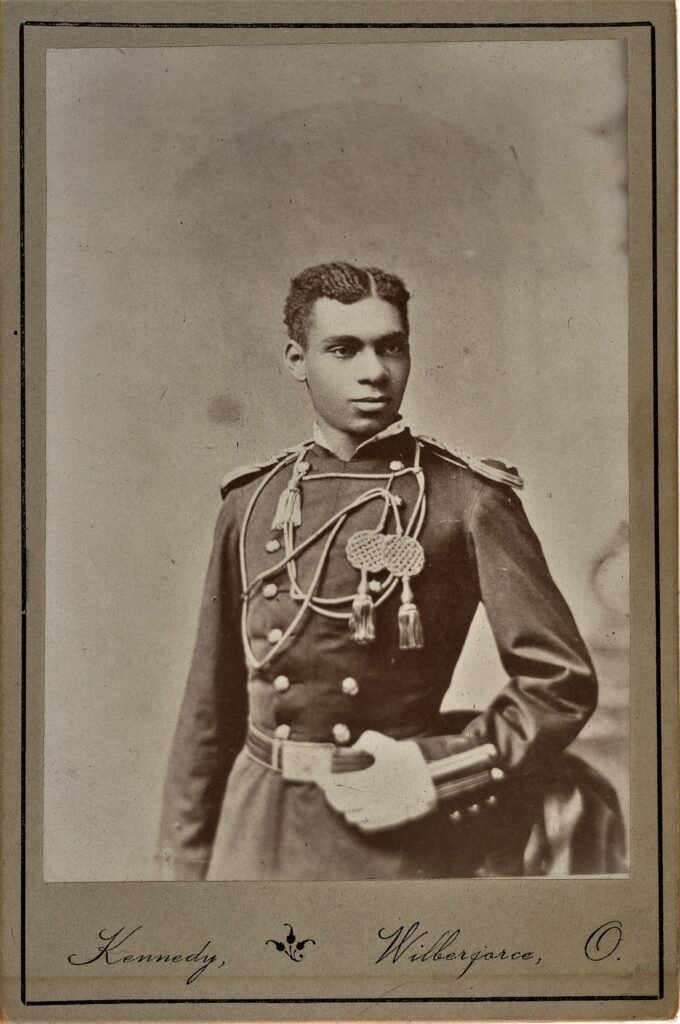
“The mistress of this fortunate household, far from discharging the duties and functions of her station, left them unnoticed and devoted her whole attention to illegitimate pleasures. The outraged husband appointed a guardian and returned broken hearted to the bosom of his own family,” (Henry Flipper, Black Frontiersman, 1963).
And this is where Henrietta finds him in August, having left his wife at their Atlanta plantation in hopes of finding comfort with his Thomasville family.
Other fun activities for the family included shopping, running a store for a friend who volunteered for the Confederate Army, more showers, and some hijinks:
“Buddie dressed up this afternoon in women’s clothes, put on a mask and frightened us a good deal.” (Friday, August 30, 1861).
But the fun and games were slowly winding down in the month of September. The first bit of panic arrived early in the month when Mrs. Barker came with news:
“I passed a very wretched night, I did not sleep any at all. Mrs. Barker came up about ten o’clock [the night before] and told us that Lincoln’s forces had landed at Fernandina and that they were fighting there and that every man that could shoulder a musket meet in Tallahassee at eight o’clock this morning. Aeneas and Buddie went down to T[allahassee] this morning and left by sunrise. They returned at nine tonight and informed that it was altogether a false alarm. I have been very unwell today.” (Friday, September 6, 1861).
Henrietta’s concerns for her husband and brother were allayed but not before setting the family off on a spell. Other rumors would circulate through town including accounts of the Confederates capturing Washington DC (not true) to British steamers breaking the blockade at Savannah (partly true).
To make matters worse, after several weeks of constant rain, a true storm came through the area. Most likely what we would consider a hurricane today, Henrietta described the aftermath in her diary:
“The wind commenced rising about eleven o’clock and about two it was a perfect gale. I could feel this house shake from its foundations. This morning was a perfect picture of desolation. The pailings were all blown down and the trees all over town. The wind has been blowing all day and I think it will be clear tomorrow,” (Friday, September 27, 1861).
Henrietta and her family were visiting friends in Thomasville when this storm came through. For those of us who have experienced the days after a hurricane, we can imagine what this scene might have looked like. And in a time before government sponsored clean-up crews, the work to restore the town following such a storm must have been massive, with most of it left to private citizens to organize and enslaved workers to perform.
By early October, Henrietta and Aeneas were staying with their Thomasville relatives, the Sewards. James Lindsey Seward (1813-1886), the head of the household, had an illustrious career in government, serving in the Georgia House of Representatives, the United States House of Representatives, and, at the time of Henrietta’s diary, the Georgia Senate. When the family was home in Thomasville, each member was highly involved in local events. Henrietta’s visit coincided with the family taking part in a tableau, a popular Victorian activity where participants dressed up in costumes and posed around scenery to create a living picture of famous stories.
“I have been busy all day helping Mattie [the Seward’s daughter] to get ready for the Tableaux tonight. She is to represent Florida in the ‘Secession of the States.’ I made her flag and trimmed it with a garland of flowers and also a wreath to go over her shoulder,” (Wednesday, October 2, 1861).
As public support for the War grew, Henrietta and her crew became even more involved. Mrs. Seward and Henrietta’s mother worked diligently to make pants and coats for the local volunteers. In the meantime, Henrietta helped Mrs. Seward sew and decorate a flag for Lucious Bryan’s unit, known as “The Dixie Boys.”
“I have painted the stars on the Blue Field of the flag this morning. Mrs. Seward sent the white stripes to Mr. Walcott to have an inscription on it. The company leaves Thursday morning and Mattie will present the flag to them at the depot,” (Friday, October 4, 1861).
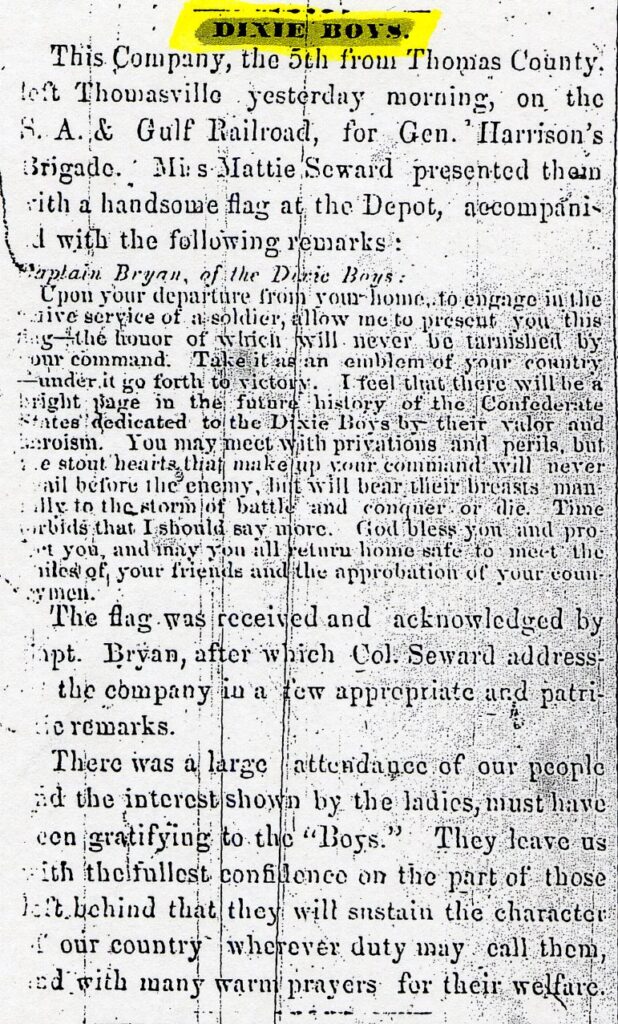
Mr. Walcott’s inscription read, “D.B. Victory or Death, August 10, 1861,” (Thomasville Times, February 26, 1893). Henrietta attended the flag presentation where Mattie made a “very neat little speech.” The Dixie Boys carried the flag throughout the war until 1864 when it was captured by Union forces at Vicksburg. Though later returned, it was in too fragile a state to be used and a replacement was made and used during the rest of the War. Currently, the original Dixie Boys flag is believed to be in private ownership. A similar flag belonging to the 29th Georgia Infantry is on display at the Thomasville History Center.
By mid-month, the Armstrong family returned home to Albany to find trouble at home. Once again their overseer was causing trouble and economic and trade challenges were making it difficult to supply their enslaved workforce with proper clothing.
“Everybody is looking gloomy, distressed, owing to the depresure [sic] in money matters. None can get credit; the cash must be paid,” (Friday, October 16, 1861).
With more work on her hands and the harvest season upon them, Henrietta soon had little time for keeping her journal. The entire months of November and December only received a few days coverage with Henrietta admitting, “My Journal is stopped for this year,” (Monday, November 25, 1861). Her last entry came on Monday, December 30, 1861 where she recorded the names of Confederate Generals as well as the President and Vice President.
While this may seem a rather disappointing end to Henrietta’s diary, worry not – there’s still a little more to come. Tune in next time for an epilogue where we answer several lingering questions: will Buddie and Aeneas survive the War unscathed? What will Henrietta’s life look like after the fall of the Confederacy? How did Thomasville change with the loss of so many young men on the battlefields? Find out next time!