
Written in Stone
Spooky season is soon approaching and the aisles of Walmart are lined with candy, costumes, and decorations for Halloween. Likewise, we’ll soon be gearing up for our Halloween offerings here at the History Center: from our cemetery tours to our trick-or-treat night in the historic backyard. If you can’t wait for tour season to start, why not use our handy guide for understanding the artwork carved into these mournful monuments while strolling through one of Thomas County’s many historic cemeteries? Take a look at these common images found on gravestones – we even made a bingo card for you and your spooky friends to play!
For the people of the 19th century, cemeteries were not just a burial ground. In densely packed cities and factory towns, they became an opportunity for green space where people could get out into fresh air. Re-envisioned as park spaces, people with the financial resources began decorating the graves of their loved ones with richly carved stones. Symbolic images told stories about the family’s feelings toward their departed loved one that words could not convey.
For our cemetery tours, we’ve compiled a list of common symbols or imagery found on stone grave markers and the meaning behind the carvings. How many of these have you seen while in a cemetery or graveyard?
_______________________________________________________________________________
Obelisk = faith, hope, and the strength to overcome adversity; immortality, eternal
Shells = religious pilgrimage and protection, and representing journeys to the afterlife or spiritual journeys through life; historically, shells were used practically in the American South to protect grave mounds from erosion, mimicking roofing shingles
Anchor = hope, steadfastness, and security; the anchoring influence of Christ
Florals arrangements = to add beauty, uniqueness, and a sense of individuality to the memorial, making it feel less standard; some flowers, like lilies, have their own symbolic meaning
Cross = faith in Jesus Christ, hope for eternal life, and the resurrection of the dead
Weeping Willow = profound grief and sorrow; rebirth, resurrection, immortality, and the enduring cycle of life
Square and compass = the Freemason’s symbol for the balance between moral uprightness and spiritual boundaries; denotes membership in the organization
Vines = eternity, growth, and the cyclical nature of life; ivy for eternal life; grapes for being a follower of Jesus; rose for love
Urn = the body as a vessel that once held the soul; mourning or a transition to the afterlife
Shroud or scarf = a veil separating the earthly realm from the spiritual
Broken column = a life cut short, representing that the person died young or in their prime, before reaching old age; the loss of the head of the family or a pillar of the community
Lamb = innocence, purity, and youth; frequently found on the graves of children and infants; Lamb of God referring to Jesus Christ and His sacrifice to take away the world’s sins
Tree stump or stack of logs = Jagged, rough breaks signify a sudden or unexpected end to a life; also used by members of the Woodmen of the World, an insurance organization
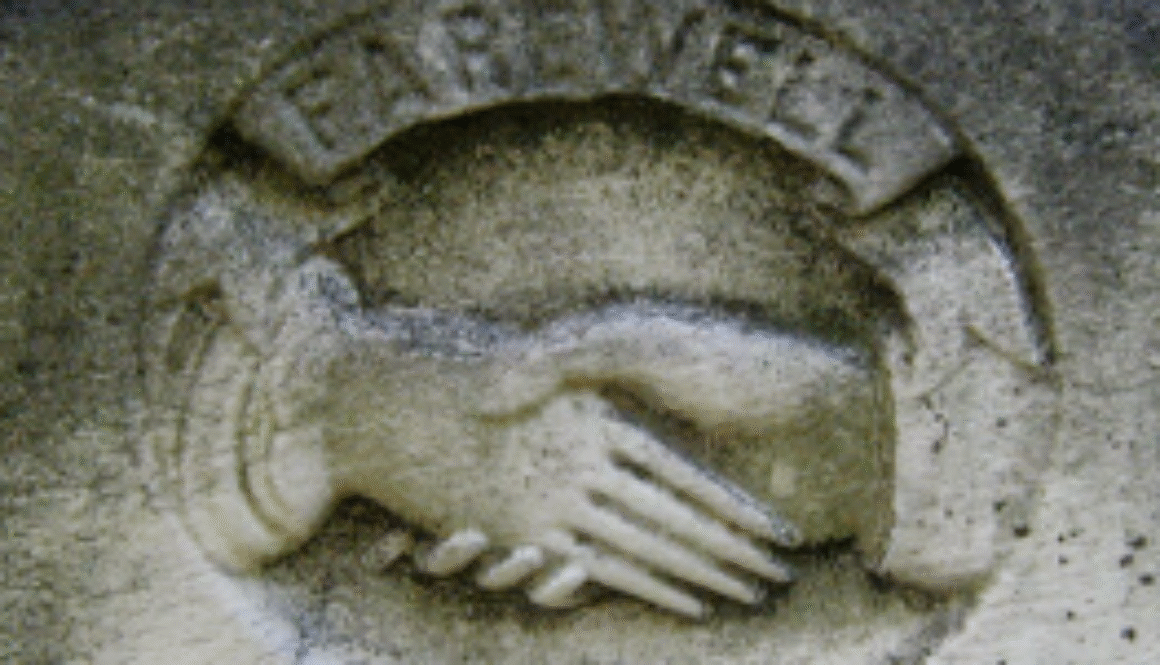
Clasped Hands = love, farewell, and the hope of rejoining in the afterlife; often representing a couple’s bond, a final goodbye, or a divine welcome into heaven
Hand pointing up = represents the deceased’s soul going to heaven, signifying the hope of an afterlife for the righteous and confirmation of a life after death
Want to print out a bingo card? Use this link: