Ochlocknee: What does it mean?
Let’s venture outside of Thomasville into the county to Ochlocknee. If you’re not from this area that name may sound rather odd – and depending on who you talk to, it may be pronounced and spelled in different ways. So why is that? And where did this name come from? And what could it mean? We looked into some research to find out the answers to these questions. The obvious answer to the question of how the town of Ochlocknee got its name is from the Ochlocknee River, but that makes for a very short and very dull blog. So instead, we’ll go back – way back – to see how the river got its name too.
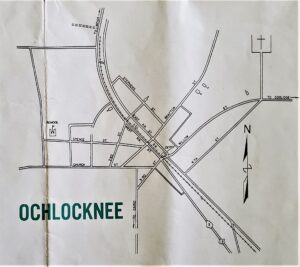
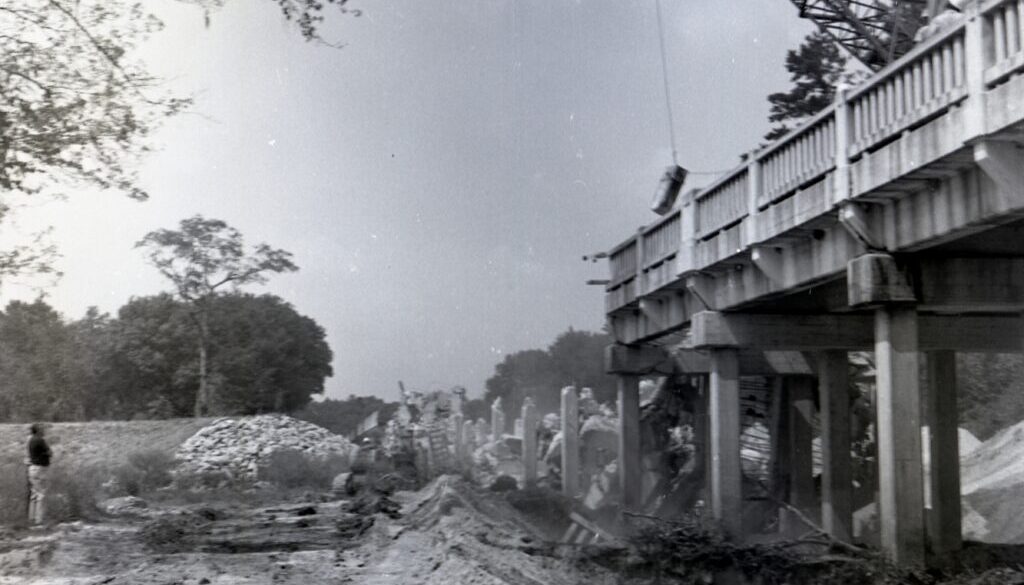
The river which we now know as the Ochlocknee River (or the Ochlockonee River if you live in Florida) starts in Worth County. From there it flows southward into Colquitt County before hanging left and cutting westward through several counties before looping back east and emptying into a bay in Apalachicola, Florida. The northwest corner of Thomas County is home to part of this river and the town is located not far from it. Like most rivers, it provides a habitat for various types of marine life as well as a food and water source for terrestrial wildlife. In other words, everyone wants to hang out by a river if they want to survive. Humans are no different.
The first people to arrive in this area thousands of years ago, were hunter-gatherers whose needs were met along the river. Eventually other groups moved into the area bringing new ideas and ways of life. One big name includes the Mississippi Mound Builders, a culture that originated around the modern southern states of America and spread throughout the eastern half of the country, including much of Georgia and Florida. Just like people today, these groups were slightly different based on where they lived. In our area, a group known as the Fort Walton Culture developed. They weren’t too different from their neighbors except that they made their pottery using slightly different materials based on what they had. As clusters of little family groups developed into larger villages, they expanded their trading along rivers like the Ochlocknee up north into middle Georgia. They became more heavily influenced by their new trade partners, and the cultural practices of the people of this area changed into what archaeologists call the Leon-Jefferson Culture, named after the counties in which archaeological evidence was found.
These were the ancestors of the people living in our area when the first Spanish explorers arrived here in the 1500s. The Apalachee People’s territory covered the Florida Panhandle up to South Georgia and west from the Aucilla River to the Ochlocknee River. They built villages, set up trade networks, and influenced their environment with controlled burns in the long leaf pine forests. Their capital city was located around modern-day Tallahassee, a site they called Anhaica, and many of their cultural centers or mounds can still be seen around the area – the Lake Jackson Mound Sites being part of that area.
When Spanish explorers and conquistadors arrived in Florida, they learned of a land north of the Big Bend called Apalachen by neighboring Indigenous people. This is where we get the modern name of Apalachee for the people who lived in our area as well as the name Appalachian used to name the mountain range that extends north of us. Like most encounters with the Spanish, this meeting did not go well for the Apalachee people. In 1528, they managed to fight off a group of invading Spanish explorers, leaving only four conquistadors to tell the tale. But in 1539 they had a much more formidable foe: Hernando de Soto. De Soto and his men quickly captured Anhaica thanks to their horses, but not long after, the Apalachee learned they could easily defeat these invaders by attacking their horses. Sorry horses.
Eventually disease and the constant invading by the Spanish wore down the Apalachee forces. Spanish missionaries moved in and converted the remaining Apalachee people to Catholicism before sending them to work at missions, like Mission San Luis, and ranches across Florida. But the Spanish couldn’t defeat them all! The Apalachee territory extended farther north than the Spanish were willing to settle in. The Apalachee people who lived in these areas managed to continue living there for several centuries more, even as European settlers began infiltrating more and more of their lands. Many Apalachee married into the white families around here but a few went on to form the Seminole Nation by joining with other indigenous groups throughout Florida.
But what about Ochlocknee? When those early Spanish explorers and missionaries first entered the area, they made maps of the land and its features. The Apalachee did not have a written language, but the Spanish took the Apalachee names and wrote their own version of what they heard.
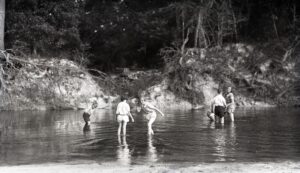
The name Ochlocknee comes from two different words in the Apalachee language. While this language is no longer used today, it was part of the Muskogee language family and was very similar to the Hitchiti and Miccosukee branches of the language. The first word in Ochlocknee is “Oki” meaning water. The Okefenokee swamp also starts with “Oki” as does the Okapilco Creek – all water ways. The second word is “Lagana” or “Lugni” meaning yellow. So to the Apalachee people, this was the “yellow water.” And if you visit the Ochlocknee River, you might notice that it doesn’t have the cleanest looking water running through it. That’s because the northern parts of the river (including our area) run through clay-rich soil which gets carried away by the current, mixing that red and sandy colored clay in with the water and giving it its distinctive color. For many generations, it was believed the name meant “Crooked Water,” but nothing has been found to support this claim.
Over time translation issues thanks to the Spanish combined with non-Apalachee speakers moving into the area, changed the name of the Oki Lugni or Oki Lagana to the modern name Ochlocknee or Ochlockonee. Local poet Lola Stubbs got the point when she wrote
“When indigenous man trod the river’s banks,
Swam root-dyed currents, swift and free,
Breathed “Oki-lag-ni, Yellow Waters,”
the white man echoed “Oaky-locknee.”
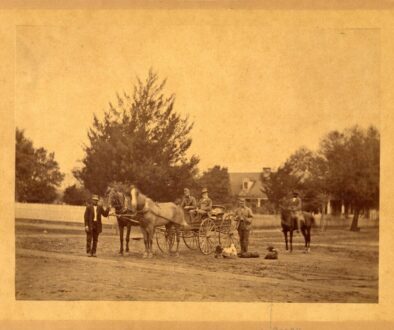
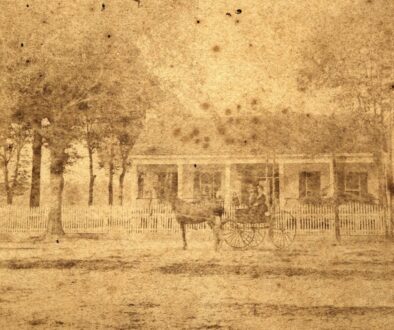
As for the town in Thomas County, the name comes from its proximity to the river. American settlers spread out into the area as early as the 1810s. But it wasn’t until the 1860s that the town was formally settled, and it didn’t have a charter until 1877. This was around the time the rail road was laid through the town, connecting Thomasville to Albany with Ochlocknee in the middle. Today Ochlocknee is a small town of around 700 people. People from all over still go to swim and fish in the river and events still celebrate the town and the people who live there.